

21 on the bill
 WD
WD CF
CF KR
KR MC
MC ZB
ZB WL
WL JK
JK
Accelerate Ideation Preserve Human Edge
Bryan PhilipsHead of Marketing, In Motion MarketingI use AI to speed up the messy early stages, not the final thinking. A good example is taking a rough webinar transcript or client call, using AI to pull out themes, hooks, and draft content angles, then rewriting the final piece by hand so it still sounds sharp and human. That hybrid approach cut the time it took to turn one conversation into usable LinkedIn posts, email ideas, and blog outlines without making the output feel generic. The improvement was not just speed, it was consistency, because more good ideas actually made it out the door.
Automate Scans Focus Creative Enforcement
William DiAntonioCEO, Brand911I approach brand strategy with an investigative mindset, drawing on my background in private investigation and financial risk to find the roadblocks preventing growth. I use AI-powered monitoring tools to automate the tedious work of scanning the internet for trademark violations and brand impersonations.
In one case, implementing these AI tools allowed an organization to identify eight times more violations without increasing their budget. This hybrid approach offloads the data collection to the machine, freeing my team to focus their creative energy on high-level enforcement and custom PR strategies.
For freelancers, I recommend using AI sentiment tools like ReviewTrackers to analyze recurring themes and tones in customer feedback. Instead of letting AI write your content, use these insights to identify exactly which pain points your human-centered creative messaging needs to address.
Treat AI As Force Multiplier
Craig FlickingerCEO, SiteRankRunning an SEO agency for 15+ years, I've watched AI shift from a novelty to a genuine workflow multiplier -- and the key word there is multiplier, not replacement.
My clearest example: I used to spend hours manually identifying content gaps and keyword clustering patterns for clients. Now I run AI analytics tools to surface those patterns in minutes, but the actual strategy -- which angles matter for that client's audience, which competitive opportunities are worth chasing -- still comes from my judgment built over years in the trenches.
The output quality went up precisely because I stopped fighting AI and started treating it like a very fast junior analyst. It handles the data grunt work, I handle the interpretation and the creative positioning that makes content actually convert.
If you're a freelancer, the move is simple: identify the most repetitive, time-consuming part of your process and let AI own that. Protect the part that requires your specific taste and experience. That's where your value lives, and clients can feel the difference.
Start With Drafts Add Local Expertise
Kelly RossiFounder & CEO, Marketing MagnitudeRunning digital marketing agencies since 2002 means I've had to constantly adapt my process -- AI is just the latest evolution, and honestly one of the most useful.
The clearest example is my work on FamilyFun.Vegas. I use AI to rapidly generate first-draft content frameworks for event listings and seasonal roundups, but the real value comes from what I layer on top -- local knowledge, SEO structure, and the kind of specific detail that actually ranks and converts. AI gets me 40% of the way there fast; my expertise closes the gap.
The same applies to client campaigns at Marketing Magnitude. When I'm building out PPC ad variations or email sequences, I'll use AI to generate multiple copy angles quickly, then apply what I know about the client's audience to cut, sharpen, and test. It compresses the ideation phase without flattening the strategy.
The mistake I see people make is treating AI output as finished work. It's a starting point. Your value as a creative or strategist is in knowing what's missing from that draft -- and that only comes from real experience.
Apply AI For Brute-Force Insight
Maria Chatzou DunfordCEO & Founder, LifebitAs a CEO and PhD in biomedicine, I've spent over 15 years building AI platforms like Lifebit that treat technology as a partner rather than a replacement. I've contributed to breakthrough frameworks like Nextflow, which allows specialists to automate repetitive data workflows so they can focus on high-level scientific discovery.
In my world, the most successful practitioners use AI for "brute force" tasks like pattern recognition while maintaining human oversight for the final interpretation. We see this with AI-driven protocol optimization, where an algorithm reviews draft plans to spot bottlenecks that a human might miss.
One trial director I worked with used an AI tool to review their protocol draft, which successfully identified issues that would have required two later amendments. This hybrid approach saved three months of work and $500,000, allowing the team to focus on patient care instead of administrative fixes.
The key for any specialist is to start with small, measurable use cases that act as a force-multiplier for your existing expertise. Use AI to flag anomalies or draft initial structures, but keep your professional judgment as the final filter for the work you deliver.
Decode Search Intent With AI
Zack BowlbyCEO, ROI AmplifiedI've managed over $100M in ad spend and founded ROI Amplified, where we specialize in Generative Engine Optimization (GEO) to help companies scale through data-driven search strategies. We treat AI as a research partner to decode how generative engines summarize information, rather than a replacement for human-led storytelling.
In an overhaul for a personal injury law firm, we used AI-driven search analysis to identify high-intent conversion paths before layering in our own performance-first SEO and PPC tactics. This hybrid strategy led to a 1,200% increase in organic traffic and a 67% lift in case intakes by focusing on measurable revenue instead of vanity metrics.
I recommend freelancers use HubSpot's marketing automation tools to handle complex workflows and reporting task lists. This allows you to focus your creative energy on high-level attribution and the "CAC and LTV math" that executives actually trust.
Use Templates At Scale Craft Place-Specific Substance
Wayne LowryMarketing coordinator, Local SEO BoostAt Local SEO Boost, I've found that AI tools work best when they handle the grunt work while I focus on strategy and personalization. I don't use AI to write client content or Google Business Profile descriptions from scratch. Instead, I use it to speed up research and initial brainstorming.
Here's a specific example: Last month, a client needed 50 location pages for their multi-location business. Each page needed unique content targeting specific neighborhoods and local keywords. I used AI to generate initial outlines based on demographic data and local landmarks I'd already researched. The AI helped me structure common elements quickly, but I personally wrote the unique angles, interviewed the client about each location's story, and added genuine local insights.
The result? Pages that actually ranked because they had real substance, not just keyword-stuffed filler. The client saw a 40% increase in local search visibility within two months. Without AI, that project would've taken me three weeks. With AI handling the repetitive structural work, I finished in one week while maintaining quality.
I also use AI for citation auditing. It helps me scan business directories faster, but I still manually verify accuracy and handle the actual corrections. The tools don't replace my judgment about which citations matter most or how to handle duplicate listings.
Another way I incorporate AI is for review response templates. I'll generate starting points, but every response gets personalized. Clients can tell when you're sending generic replies, and so can their customers.
The key is knowing where AI adds speed without sacrificing the human touch that makes local SEO actually work. At Local SEO Boost, we've found that sweet spot, and our clients' rankings prove it.
Draft Quickly Then Restore Your Voice
Jitender KumarDigital Marketing Specialist, SkillWaalaKeeping Your Voice Intact While Making Writing More Efficient
Most of my freelance work begins with a big or a loose outline. I use AI to generate an initial draft. The reason I use it is to get things moving. That distinction matters. What comes out is rarely usable as is. The real work starts after that, when I begin cutting, reshaping, and rewriting until the piece actually sounds like me (or the brand I'm writing for).
There was a stretch where deadlines stacked up. Multiple articles, limited time, zero room for compromise on quality. If I write everything from scratch, it would be like choosing between speed and depth. Instead, I used AI to generate rough versions quickly, then spent my energy bringing clarity and making a strong narrative flow. The difference showed. The final pieces felt more deliberate, not rushed, because I wasn't stuck in the weeds trying to produce volume.
If there's one thing that separates good use from lazy use, it's involvement. Passive editing won't cut it. You have to question what's written, dismantle weak sections, and rebuild them with intent. Sometimes that means throwing out entire chunks and starting fresh. Other times, it's about spotting a decent idea buried under generic phrasing and pulling it into something sharper.
Used carelessly, AI flattens your voice. Used properly, it gives you room to expand it.
Generate Boilerplate Preserve Architectural Judgment
 Amit AgrawalFounder & COO, Developers.dev
AI should not be regarded as a substitute for human creativity but instead should be seen as an exceptionally quick intern to take care of the structured, or hard, "scaffold" of creating. For example, when our team built a new API layer as part of a recent enterprise project, we used AI to produce the boilerplate code to perform standard CRUD operations on that API layer. The time that the AI saved for the lead developer was used by the lead developer to focus on the much more time-consuming problem of designing data integrity and security logic for the many complex edge cases that could occur.
The best hybrid approach to leveraging AI is not to let AI decide but rather to enable the developer to eliminate the cognitive load of doing the drafting of a design so that they have the mental space to focus on designing the "why" of the architecture. By automating the mechanical portions of the design and development process, the developer can be much quicker, and they will also have more cognitive space available to solve higher-level problems.
The key to finding real value in this kind of collaboration between AI and humans lies in the extent to which you protect the human-in-the-loop through the decision phase of the design process. AI accelerates the completion of tasks, but it does not replace the subtleties that an experienced architect brings with them concerning the long-term business implications of making a particular technical decision.
Map Sentiment Gaps Execute With Discretion
 John DeMarchiCEO & Founder, Social Czars
With a background from Harvard and Syracuse and 15 years in corporate PR, I now lead Social Czars, where we handle high-stakes SEO crises for CEOs and VIPs. My work focuses on how generative SEO and AI are fundamentally changing the way business leaders must protect their digital reputations.
I use Claude to analyze vast datasets of search results to identify specific "sentiment triggers" that negatively impact a client's company valuation. This tool identifies the specific keyword gaps where we can place new, positive media content to effectively suppress damaging links.
For example, during a Wikipedia page defense, I used AI to cross-reference thousands of archived press mentions against Wikipedia's strict sourcing requirements. This hybrid method ensured our manual edits were supported by the strongest possible data, making the page much more resilient to negative or biased edits.
This approach allows us to move faster in a reputation crisis without losing the "white glove" discretion that high-profile clients require. The AI provides the data-driven map, but my experience in PR and SEO provides the human judgment needed to execute the final strategy.
Use Outlines Then Tell Real Stories
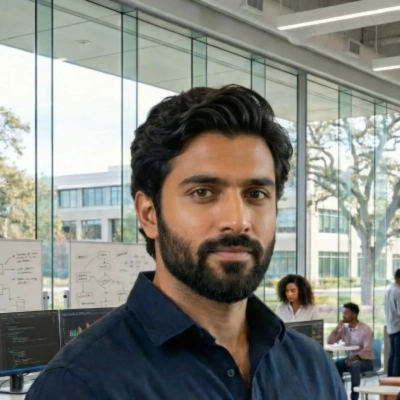 Faiz AhmedFounder, GpuPerHour
The way I think about AI tools is that they compress the boring middle of any creative task so I can spend more energy on the parts that actually require judgment. When I was building the marketing site for GpuPerHour, I had a clear vision for how I wanted the value proposition to land, but I was stuck on the supporting copy for individual use-case pages. I used an AI writing assistant to generate rough drafts for each page, then rewrote almost every sentence by hand. The AI gave me a starting shape to react to, which is far easier than staring at a blank editor.
The specific example that stands out happened when I was writing the page explaining why on-demand GPU rentals matter for independent machine learning researchers. The AI draft was technically accurate but read like a textbook. I kept the structure it suggested, three short sections organized by workload type, but replaced the language with stories from actual customers I had spoken with. One researcher told me he burned through four thousand dollars on a cloud provider before realizing he only needed burst access for a few hours each week. That anecdote became the anchor of the page, and it would never have come from a prompt.
What the AI did save me was roughly two days of outlining and first-draft writing across eight pages. That time went directly into customer interviews and design tweaks that made the final site more honest and specific. The pattern I keep returning to is simple: let the tool handle volume and structure, then bring your own taste and context to the revision. Anything that requires empathy, nuance, or a real human story still needs a human hand.
Faiz Ahmed
Founder, GpuPerHour
Model Foot Traffic Design For Impact
 Loren GundersenCEO, Art & Display
I lead Art & Display, where I've spent over three decades helping global brands like Google and NASA turn live events into brand moments, most recently as the official exhibit partner for 55 exhibitors at the 2025 AI Engineer World's Fair. My experience managing complex installations for high-growth tech industries gives me a front-row seat to how AI shifts from a technical subject to a functional creative assistant.
We incorporate AI-driven predictive modeling to optimize booth layouts and budget allocation across modular elements before construction begins. For technical clients like Keysight, this hybrid approach allows us to use data to determine the best placement for interactive displays, ensuring the physical environment facilitates the face-to-face authenticity that algorithms can't replicate.
By using predictive analytics to analyze historical heat mapping, we eliminate guesswork regarding attendee flow during the design phase. This ensures our creative energy is focused on building high-impact brand environments that encourage genuine networking and content capture rather than just surface-level aesthetics.
Find High Intent Then Personalize
 Madeline JackChief Client & Operations Officer, Blink Agency
As Chief Client & Operations Officer at Blink Agency, an AI-driven growth marketing firm, I lead strategies that blend our proprietary HIPAA-compliant AI platform with human creativity for healthcare and nonprofits.
We use AI to analyze behavioral data from websites, emails, and content, uncovering high-intent audiences--then layer on strategic storytelling to craft personalized campaigns.
For a healthcare client, AI-powered CDPs tracked patient interactions to segment disengaged users; our team then built targeted re-engagement emails with empathetic narratives, boosting appointment bookings without losing the human touch.
This hybrid drove scalable growth, like in our Renaissance Limos case where AI insights informed brand positioning and seamless booking integration, turning strategy into rapid traction with over 1,000 rides.
Keep Direction Let AI Handle Execution
 Runbo LiCEO, Magic Hour AI
I'm Runbo Li, Co-founder & CEO at Magic Hour.
The entire premise that AI "replaces" creativity is backwards. AI replaces the tedious execution that sits between your idea and the finished product. The creative process, the taste, the judgment, the knowing-what-to-make, that's still entirely human. What AI kills is the bottleneck.
Here's a concrete example. Before Magic Hour, I spent up to a full day producing a single video for social media. Filming, editing, color grading, adding effects. One video. One day. When I started using AI tools, specifically early Stable Diffusion workflows I hacked together myself, I went from one video a day to posting AI-generated content daily across multiple platforms. That shift in output is what let me reach over 200 million people organically. One NBA edit went so viral that Mark Cuban followed me, became a paying customer, and the Dallas Mavericks reached out on their own.
The creative decisions never changed. I still chose the subject, the style, the hook, the timing. AI handled the rendering. That's the hybrid approach people overcomplicate. You stay the creative director. AI becomes your production team.
I see this pattern constantly with creators and small business owners on our platform. A solo marketing consultant who used to outsource video work for $500 a pop now produces her own content in minutes using Magic Hour templates. She told us her client roster doubled in six months because she could finally show, not just tell, what she does. The ideas were always there. The execution gap was the problem.
The freelancers who are thriving right now treat AI the way a chef treats a kitchen. The tools don't decide what's on the menu. You do. But better tools mean you serve more tables, faster, at higher quality.
Stop asking whether AI replaces creativity. Start asking how much of your day is spent on work that isn't creative, and hand that part to a machine.
Speed First Pass Then Add Taste
 Jamie KotheDirector, DSDT College
I'm well-placed to answer this because at DSDT College I work closely with hands-on programs in AI Prompt Engineering, AI-powered video production, digital marketing, and career training for adult learners building real portfolio work. The best freelancers I see use AI as a fast draft partner, then apply human taste, editing judgment, and client context on top.
A specific example is video production. In our AI video production training, students use AI tools to automate rough editing tasks and generate creative starting points, but the real improvement comes when they manually refine cuts, pacing, transitions, and effects inside the edit. AI speeds up the mechanical part; the freelancer still owns story, tone, and what actually deserves to stay on screen.
Another strong example is prompt-driven creative work. In our AI Prompt Specialist program, students define a real problem, test multimodal prompts across text, image, audio, and workflow tools, then document iterations and evaluate the output. That hybrid approach improves work because AI gives range and speed, while the human decides what is usable, ethical, on-brand, and worth presenting to a client.
For gig workers, my practical advice is simple: use AI for ideation, first drafts, and repetitive production steps, but keep revision, troubleshooting, and final quality control human. That's the model we push for nationwide online learners at DSDT College, especially career changers, military, Veterans, spouses, and creatives building skills in digital media, tech, and even structured pathways like our 100% online MRI and IT programs.
Optimize Semantics Then Tailor Messaging
 Cristian DroescherFounder, Clear Brands,
As founder of Clear Brands, a Tampa-based agency specializing in AI Optimization alongside web design and SEO, I've used AI to enhance our content strategies for modern search without sidelining human execution.
In our chiropractor website project, we applied AI tools for semantic content optimization and structured data, generating AI-ready schemas, then manually tailored messaging to match the client's local Tampa audience and brand values.
This hybrid improved results by making the site discoverable in AI-driven responses, boosting steady visibility and lead flow over complex trends alone.
Gig workers can adopt this by auditing sites with AI for context signals first, then layering human refinements for sustainable, on-brand growth.
Turn Raw Data Into Community Insight
 Rina GutierrezPart-time Marketing Coordinator, Doggie Park Near Me
I run Doggie Park Near Me, a directory for dog parks and pet services across the country. When I started building the site, I spent weeks writing unique descriptions for every park listing by hand. It was exhausting and honestly, the quality dropped as I pushed through fatigue.
Then I started using AI to draft initial descriptions based on raw data like location, amenities, size, and user reviews. But I don't just publish what the AI spits out. That's where a lot of people go wrong in my opinion. Instead, I use those drafts as a starting point and rewrite them with the personality and local knowledge that only comes from actually visiting these places or talking to the dog owners who use them.
One specific example stands out. I was building a page for a small off-leash area in Austin that had pretty basic features. The AI gave me a generic, perfectly fine description that hit all the facts. But I knew from talking to local owners that this park had an incredible Saturday morning community where people brought coffee and homemade dog treats. I rewrote the AI draft to lead with that community angle, and the page ended up ranking on the first page of Google within two months. The AI saved me probably forty minutes on the structure and facts, and I spent twenty minutes adding the human touch that actually made it worth reading.
For other gig workers, my advice is simple. Let AI handle the repetitive setup work so you can focus your energy on the parts that actually need your voice and experience. The tools aren't your replacement. They're your research assistant, your first draft machine, your data organizer. The creativity still has to come from you. I've found that the best results come when I treat AI output like a conversation partner that gets me 70% of the way there, then I push it the rest of the distance with what I know that no algorithm could figure out.
Use AI To Stress-Test Designs
 Peter SignoreCEO, Dynaris
As someone who builds AI tools for a living, the human-AI collaboration question is one I think about constantly — not just as a product problem but as a daily working reality.
The most meaningful example I can share: I use AI as a thinking partner for architectural decisions, not as a code generator. The distinction matters.
When I'm designing a new system component — let's say a new workflow engine or a customer interaction scoring model — I don't ask AI to write the code. I describe the problem I'm solving, the constraints I'm working within, and the tradeoffs I'm weighing, and I use the AI conversation to stress-test my own thinking. It forces me to articulate assumptions I'd otherwise leave implicit, and it reliably surfaces edge cases or alternative approaches I hadn't considered.
The hybrid element: the creative judgment calls are mine. I decide what problem is worth solving, what the right abstraction is, what the user experience should feel like, and when a technically correct solution is the wrong product decision. AI handles the search space — rapidly exploring what approaches exist and what their tradeoffs are. I make the final call on what actually gets built.
The quality improvement this produces is real and measurable: fewer design mistakes that surface in production, faster iteration on early-stage decisions, and a consistent habit of defending my choices against alternatives rather than defaulting to the first solution that comes to mind.
The key principle: AI doesn't replace creative judgment. It sharpens it, if you use it as a sparring partner rather than an answer machine.
Scale Responses Yet Retain Specificity
 Liviu MultiplyFractional CMO, Multiply CMO
The hybrid that works for me: AI handles the structural scaffolding, I handle the judgment and the voice.
Building Multiply CMO as a solo operator, I use AI throughout my content and expert response workflow but the creative contribution it makes is in compression, not creation. When I respond to journalist queries, AI drafts within a framework I've established: which story from my background fits this question, what's the reframe that makes the answer non-obvious, what's the specific number that makes it credible. The draft arrives structured. My job is to redirect it toward the right story, sharpen the angle, and add the details only I know: the real numbers, the actual context, the specific moment where the lesson landed.
The improvement this produced: I can respond to five times as many queries in the same time without any reduction in the specificity or authenticity of the answers. The creative ceiling didn't drop. The production floor rose.
Record Voice Notes Then Structure With AI
 Tor RydderCreator, Organizing.tv
One way I use AI to enhance my creative process is by starting with voice notes instead of a blank page.
The best thinking usually happens when I'm talking through an idea, not staring at a cursor.
So instead of trying to write a perfect first draft, I record a messy voice note where I explain the concept, the objections, and the parts I'm unsure about, then drop the transcript into an AI chat and have it turn that raw thinking into an outline.
The important part is that AI is NOT making the creative decisions. It's getting me from scattered thoughts to something editable much faster.
In March, I voice-noted a 15-minute rant about why every packing checklist online is useless. It was messy, contradictory, half of it tangents about what I had in my bag during a very delayed flight to Bangkok last year.
AI turned it into a clean five-section outline in under a minute. Then I spent an hour rewriting it because the AI version was correct but flat. The voice note had the energy, the outline gave me the structure, my edit put the voice back in. None of those three steps would have produced a usable article on its own.
The hybrid works because the energy and the judgment have to come from me. AI just removes the friction in between.
Standardize Structure Then Add Interpretation
 Roman VassilenkoFounder, ChainClarity
The hybrid approach that works for AI-assisted content creation at ChainClarity: AI generates the structural scaffold and the first-pass content; humans supply the judgment, domain knowledge, and voice.
Concrete example: every blockchain whitepaper explanation we publish starts with an AI-generated draft following a structural template -- problem statement, mechanism design, security properties, economic model, known limitations. The model generates this draft in 15 minutes from the source document.
What AI does well in this process: structural consistency across 560+ explanations, cross-reference checking between the explanation and the source document, identification of which sections of the whitepaper are missing from the explanation.
What AI does poorly and humans fix: the model flattens nuance. An explanation of a novel consensus mechanism might be technically accurate but miss the specific insight that makes the mechanism interesting -- the tradeoff it accepts that previous approaches rejected. A human reader of the source document brings the context to identify that insight; the model doesn't reliably surface it without a very precise prompt.
The creative quality metric that improved: our "insight density" -- explanations that contain at least one observation that isn't paraphrase of the source but adds interpretive value -- is higher when humans edit AI drafts than when humans write from scratch. The reason: the AI draft handles the structural and expository work, freeing the human editor to focus entirely on the interpretive layer rather than dividing attention between exposition and insight.
Roman Vassilenko is the founder of ChainClarity (chainclarity.io), an AI platform making blockchain research accessible to investors and developers.