
15 on the bill
WM RA
RA
RAQ&A / 2026-08-20
Freelancing offers far more than schedule flexibility and location independence. Industry veterans and career consultants reveal fifteen concrete advantages that reshape daily routines, mental health, and financial security in ways most people never anticipate. These benefits extend beyond income potential to transform how work fits into a meaningful life.
 Gigs Magazine /
15 on the bill
RA





 Will MitchellFounder, StartupBros
The unexpected part was time-zone freedom. When I started sourcing products from China, I assumed the 12-hour gap would be a permanent headache, and it became the best working arrangement I've ever had. My suppliers were awake while I slept, so questions I sent at the end of my day were answered before I opened my laptop. My mornings turned into pure execution time.
That rhythm reshaped my whole day. I could take a walk before anyone needed me. I could work a hard block from 6 a.m. to 11 a.m., then handle the afternoon however I wanted, because nothing urgent was coming from the other side of the world until evening. Nobody scheduled a 2 p.m. meeting that ate the center of my day.
I live in a high-rise in downtown St. Petersburg now, and the practical version of this is that I get to use my city while everyone else is at a desk. Restaurants aren't packed at 3 p.m. The water is quiet on a Tuesday. When I pick clients, I weigh their working hours as seriously as their budget, because clients whose peak hours don't overlap with mine give me back the middle of my day.
The one I didn't see coming: freelancing before RMD had a team taught me exactly which parts of running an agency I actually wanted to keep doing myself, and which parts I was only doing because there was nobody else to hand them to.
Working solo across French and English clients in different time zones, the work I dreaded—invoicing follow-ups, minor ad account tweaks, formatting reports—was never the marketing work itself. It was the administrative layer around it. That distinction shaped how RMD got structured later: the first hires weren't more marketers; they were people to take the administrative layer off my plate so the strategy and client relationships stayed with me.
The quality of life improvement that has lasted: I still write the strategy for every client relationship personally, three countries in, because freelancing taught me that's the part of the work I don't get tired of, even at volume. Most advice about scaling says hire yourself out of the work entirely. What freelancing actually taught me was to hire yourself out of the parts of the work you were only doing by default, and keep the part you were freelancing for in the first place.
Scott BrownFounder, Focus Group PlacementThe unexpected positive aspect is how much freelancing has helped develop my skills at being aware of times of actual productivity compared to being occupied. Once I began connecting people to surveys and focus group research, I noticed how freelancers and gig economy workers in our community tend to organize their schedules according to energy peaks rather than conventional nine-to-five working hours, and I adopted the same principle for myself. It gave me several hours per week back that I had previously wasted on unproductive activities, and it changed my attitude towards what tasks are worthy of my attention.
Ankit SarawagiCurator, CFO MatrixAn unexpected benefit is the flexibility. With a job in which you don't manage your clients, it's almost impossible to get the few hours off the grid on a couple of afternoons on a random Tuesday. You have to plan ahead and turn off emails on your various communication devices, and even then it's hard to escape the guilt of work when you look at your Slack on your phone.
Since my own workload is managed through client projects, I get the luxury of doing the work and being paid and being able to shut the laptop down when I finish a project on a Thursday afternoon and enjoy the rest of the day without doing busy-work just for the ability to sit in an office for eight hours straight.
This new working relationship has eliminated my constant feeling of burnout as it allows me to work extensively for hours at a time when I'm focused and able to get a decent amount of work done while erasing almost entirely the other hours of the day without having to feel guilty about it or ask permission.
Amit AgrawalFounder & COO, Developers.devFreelancing forces a radical acceleration of professional skill acquisition through mandatory project diversity that traditional employment rarely matches. In twenty years of managing global remote engineering teams, I've observed that the most successful independent professionals are those who cycle through different business models and technology stacks in rapid succession. While a corporate specialist might work on a single platform for years—often leading to skill stagnation—freelancing demands a level of mental agility that turns constant context-switching into professional resilience. This advantage specifically improves quality of life by replacing the fear of industry obsolescence with a deep-seated confidence in one's ability to learn. When you have successfully navigated ten different industry verticals or integrated competing frameworks across various projects, you stop worrying about the next market shift. This self-reliance provides a sense of autonomy that transcends the perceived security of a steady paycheck. It shifts the focus from time spent at a desk to the actual value delivered through specialized problem-solving. By selecting projects that align with personal growth rather than corporate mandates, work becomes a continuous education rather than a repetitive obligation. The true freedom of freelancing is not just about choosing your hours, but about choosing the challenges that define your professional identity and ensuring your market value remains high regardless of the economic climate.
Jason LevinCEO/Founder, Memelord.comThe biggest surprise was that the audience becomes the asset, not the hours. When I started I thought I was selling my time. Then I began posting memes on X, built pages to millions of followers, and realized distribution I built once kept paying me forever. That flipped my whole life. I stopped trading hours for dollars and started building stuff that compounds while I sleep.
Quality of life wise, it meant I could charge weird and win. My first newsletter was $6.90 a month on purpose. Nobody pays that by accident, it was a brand move. That freedom to run dumb little experiments is impossible with a boss breathing down your neck. It's the same muscle that became memelord.com, the Canva for memes. Freelancing taught me that being funny and specific online beats grinding, because the internet rewards distinctness way more than effort.
Runbo LiCEO, Magic Hour AII'm Runbo Li, co-founder and CEO at Magic Hour.
The most unexpected benefit wasn't freedom or flexibility. It was the collapse of the gap between effort and outcome. When you work inside a large organization, there's this massive latency between what you do and what happens. You ship something brilliant, and it disappears into a roadmap. You freelance, or in my case, build your own thing, and every hour of work hits reality immediately.
Before David and I started Magic Hour, I was at Meta working on zero-to-one products. Good work, smart people, but the feedback loop was months long. When I left and started posting AI-generated videos as a side project, the loop collapsed to hours. I'd make something in the morning, post it, and by evening I'd know if it resonated. One NBA edit I made went viral, reached millions, and led to Mark Cuban becoming a paying customer. That entire arc, from creation to real economic outcome, happened in days. Not quarters. Days.
That speed changes your quality of life in ways people don't talk about. You sleep better because you're not carrying anxiety about things you can't control. You don't dread Mondays because there's no artificial separation between your creative energy and your economic output. The thing you make IS the thing that pays you. There's no middle layer extracting meaning from your work before it reaches the world.
I call it "zero-latency living." When the distance between your input and your feedback shrinks to almost nothing, you make better decisions faster, you course-correct in real time, and you stop wasting years on paths that aren't working.
The real quality of life upgrade isn't about working from a beach. It's about never again wondering whether what you're doing actually matters. You find out immediately.
Christopher CoussonsDirector, Visionary MarketingA caveat on the framing first. I did not freelance in the gig platform sense. I left employed marketing roles, started on my own, and it grew into an agency, so what I can speak to is the independent part rather than the marketplace part.
The benefit I did not see coming was speed of feedback about my own worth. Inside a company, you can spend a couple of years on work that is admired in meetings and worth nothing to anybody outside the building, and nothing tells you. On your own, the market answers in weeks. Something either sells or it does not, and people either renew or they quietly stop replying. That was deeply uncomfortable for about six months and then became the thing I would least want to give up.
The improvement to life outside work came from what that let me stop doing. Within the first year, I could see which service lines produced arguments, late nights, and almost no margin, and I dropped one that looked impressive on the website and cost me my evenings. That gave back around 8 hours a week, and I was only able to make the call because the numbers were sitting in front of me rather than buried in somebody else's departmental report.
The freedom everyone expects, working whenever you like, was not the benefit. The responsibility is total. Knowing quickly when you are wrong is worth far more.
 Ankush GuptaFractional CMO, Fameninja ORM Management Company
The most surprising quality-of-life gain from freelancing wasn't flexibility or money. It was permission to fire clients who made work miserable.
Before running my own ORM work, I worked in-house at agencies where the default posture was always yes. Toxic clients stayed because they paid on time. The work ground you down, but you stayed because leaving meant unemployment, not just ending one relationship.
Running my own business flipped that completely. I can walk away from a client who disrespects the team, micromanages every draft, or treats deadlines like suggestions. That power changes how you show up to work every day. You stop bracing for the next unreasonable demand because you know you can end it if you need to.
We had a client two years ago who would call at 11 p.m. on weekends expecting immediate responses. First time, we accommodated. Second time, we set boundaries. Third time, we ended the contract. The mental relief was immediate. The team morale improved within a week.
What actually improved my quality of life wasn't the freedom to work from anywhere or set my own hours. It was the freedom to only work with people I respect. That filters into everything else. I sleep better. I'm less irritable at home. I don't dread Monday mornings.
The other shift was building work around my energy, not around someone else's schedule. I block mornings for deep work because that's when I think clearly. Client calls happen in the afternoon. No one cares as long as the work ships on time. That rhythm wouldn't exist in a traditional role, where your calendar is someone else's puzzle to solve.
 Victor SmushkevichFounder, Call Setter AI
Flexible hours get all the credit, but they're not what actually improved my life. Control over my attention did. In a job, every call and email felt like it owned a piece of my day. Running my own company, I decide what gets a response right now and what waits until later. That shift cut my daily stress more than extra sleep or a flexible calendar ever did. I run phone systems that answer calls for home service businesses, so I see this pattern constantly. Owners describe the phone ringing before they've had coffee and running their whole morning. Watching that made me protect my own time the same way. I set blocks where I'm reachable and blocks where I'm not, and I don't feel guilty about the second part anymore. My quality of life improved the day I stopped treating every incoming message as an emergency. Learning that took longer than starting the company did.
 Fahad KhanDigital Marketing Manager, Ubuy Peru
The benefit I genuinely didn't anticipate was how much of my cognitive energy had been consumed by organizational politics at the companies I'd worked for, and how much of that energy became available once the politics disappeared.
Not complaining about the organizations specifically. Large and mid-sized companies generate coordination overhead as a natural consequence of having many people with different incentives trying to make decisions together. Some of that is necessary and some of it is just the texture of how institutions work.
Freelancing removed almost all of it. The decisions I'm making are about the work rather than about how to navigate the work through a system designed for different purposes.
The quality of life improvement wasn't primarily about schedule flexibility, which gets mentioned most often and which matters, but about the reduction in low-grade mental load that had been running in the background of every workday for years without me fully registering it as a cost.
Hard to quantify. Noticeable enough that going back to an organizational environment would require a genuinely compelling reason.
 Anna EvansFounder, Interlinked Wellness
I am not a freelancer in the strict sense. I left an employed post to run my own practice, which is the same bargain in a different shape: nothing arrives unless the work is there, and nobody above you decides how the day runs.
The benefit I did not see coming was control of the length of an appointment. In my employed years, the clock belonged to somebody else, and the honest cost of that is the conversation you close early because the next person is already waiting. Our standard visit is now 40 minutes. I did not pick that number for the website; I picked it because it is roughly the point where people stop giving you the tidy version of the answer and tell you the real one.
What it changed outside work surprised me more. I stopped carrying unfinished conversations home. The particular tiredness I used to feel was never the hours; it was the residue of ten interactions I had cut short. I remember driving back at the end of a week longer than any I had worked as an employee, and noticing that I was not rehearsing anybody in my head.
The freedom people describe is usually time off. The one that changed my quality of life was the right to let something take as long as it takes.
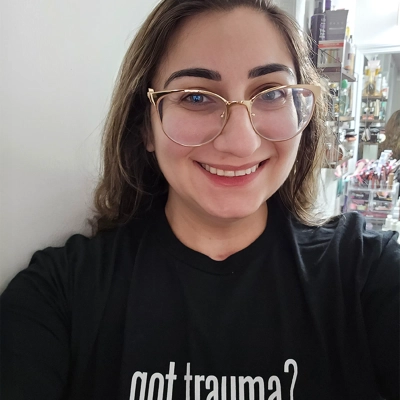 Alyssa OstroffFounder/Designer, Self-Care Shirts
One unexpected benefit of freelancing was realizing it could become a real safety net, not just extra work on the side. I ran a freelance design business for years, and when I was laid off from my role as a senior graphic designer at the CDC in 2025, that foundation helped me keep moving instead of starting from zero. It also gave me the runway to build Self-Care Shirts into something that now pays my bills. That stability has improved my quality of life by reducing the constant fear that one email or one decision outside my control could upend everything. It has given me more peace of mind and more day-to-day control over how I use my time and energy.
Alyssa Ostroff, Founder/Designer of Self-Care Shirts (www.selfcareshirts.com)
 Kur WinCEO, My Reno Service
One unexpected benefit was gaining predictable cash flow after I changed how I bill projects. I began taking an up-front payment and additional payments at defined milestones instead of waiting for a large end-of-project invoice. That change eliminated the need to float project costs, reduced the stress of uncertain payments, and made it clear which clients paid slowly. With steadier incoming payments, I could reinvest in the business and make calmer, more confident decisions about operations and growth.
 Natalia MagandaWebsite Design and SEO For Therapists and Private Practice, Natalia Maganda
Honestly, I did not even start freelancing on purpose. I started a sustainable fashion blog with no strategy and no business plan, just something I was curious about. That blog turned into marketing consulting. The consulting turned into a web design agency. And once I became a mother and found myself surrounded by the mental health community, everything clicked into place and I niched down into boutique websites and SEO exclusively for therapists and private practice owners. Looking back, none of it was planned. It snowballed.
The unexpected benefit was permission. Nobody was going to promote me into the next version of my business. I had to decide for myself when a chapter was done and give myself the green light to pivot into something that actually lit me up. That is not something you get in a corporate job. I remember sitting at a corporate desk early in my career and feeling nothing. Freelancing gave me the room to follow what did make me feel something, without asking anyone for approval first.
That freedom is the whole reason I get to run a six-figure business on about 20 hours a week now. I am not trading my time for someone else's timeline anymore. I get to be present for my kids, build a business that reflects the depth of the work I actually care about, and let the systems I have built carry the rest. That is the quality of life shift nobody warns you about when you start freelancing. It is not just flexible hours. It is finally building something that holds your real life instead of asking you to shrink it.