
A few weeks ago, I read a stat that stopped me mid-coffee. Searches for "saxophone wedding" jumped 143% in a single year, according to Hitched. One US sax player went from playing one or two weddings a year to seven in a single summer.
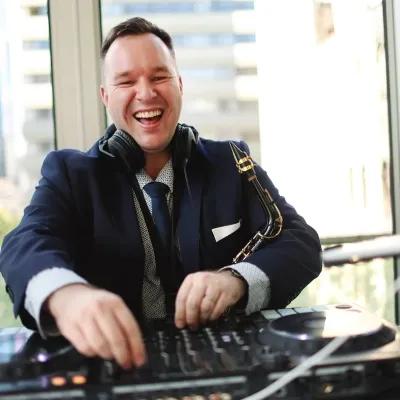
I picked up a sax at thirteen, added trumpet at fifteen, and have been DJing weddings, corporate events and private parties across Canberra, Sydney, the South Coast and Melbourne for over twenty years now. So when I see numbers like that, I don't just see a trend. I see my own diary filling up faster than it did five years ago, and I want to tell you why I think the next five years will reward working performers more than anyone realises.
There's a story going around that AI is coming for creative jobs. That couples will skip the DJ and just hit shuffle on Spotify. That wedding bands and live musicians are heading the way of the rotary phone. I get why people believe it. The headlines write themselves. But after spending the last few months digging into where the actual money is moving in the events industry, I think the opposite is true.
The bottom is falling out, and the top is getting bigger
Here's what the data shows. AI tracks now make up 44% of daily uploads to Deezer. Suno raised US$250 million at a US$2.45 billion valuation last November. Sixty million people used AI to make music in 2024.
But those AI tracks earn between 0.5% and 3% of streams. Deezer's own CEO reckons 85% of even those streams are bot fraud. Meanwhile, live music tour grosses hit a record US$9.5 billion in 2024. Live Nation pulled US$25.2 billion in 2025. Wedding spend per guest in the US is up 33% on 2019 levels. Australian couples now drop an average of A$38,252 on their wedding.
So here's what's happening. The bottom of the music economy, the commodity layer where AI competes, is flooding fast. Streams are getting cheaper. Background music is getting cheaper. Generic playlists are getting cheaper. But the top of the market, where you're paying a real person to be in the room with you on the most important day of your life, is getting more valuable, not less. The gap between the two widens every quarter.
The hybrid act is the wedding industry's new premium tier
Back to that 143% sax stat. It isn't a fluke. The New York Times ran a feature on it in November. Australian operators are pricing DJ-plus-sax setups at roughly 70 to 80% of a live band's impact for around half the cost. UK agencies have gone from offering hybrid acts as a curiosity to leading their websites with them.
When I'm playing a song on the decks and then pick up the sax for the bridge, something shifts in the room. Phones come out. People who weren't dancing start dancing. The energy lifts in a way no playlist can replicate, because nobody fakes the sound of a real instrument in a real room with a real person making real decisions about what comes next. After two decades of doing this, I can tell you with certainty that this part of the job will not be automated.
So the question for any working DJ reading this isn't whether AI will replace you. It's whether you've built something AI cannot replicate. A multi-instrument set. A reading-the-room reflex. A relationship with a couple that started six months before their wedding day. These are the things that grow more valuable as the floor of the market drops, not less.
The smart use of AI is as a collaborator, not a competitor
While I'm bullish on the human side of this, I'm not anti-AI. Quite the opposite. I'm building an AI startup with a partner in the US right now precisely because I think the working creatives who pull ahead in the next few years will be the ones who use AI to amplify what makes them irreplaceable.
Think about what eats your week as a working performer. Lead response. Contract drafting. Setlist coordination. Music licensing admin. Social content. Quote chasing. None of that is the part of the job your couples are paying for. All of it can be made faster, smarter and less draining with the right AI workflow sitting alongside you.
So the question isn't AI versus human. It's whether you're using AI as a tool to free up more of your time for the parts of your craft that only you can deliver. The DJs I see thriving in 2026 are the ones treating AI like a great roadie. It carries the boring stuff. They focus on the show.
What I'm telling working performers
If you're a DJ, a musician, an entertainer, or any kind of working creative, here's what I'd say. Stop worrying about being replaced. Start widening the gap between what you do and what a machine can do. Add a second skill if you can. Learn an instrument if you don't already play one. Get better at reading rooms. Build relationships with your couples that start the moment they enquire and don't end the day after the wedding.
And if you're not already using AI to handle the admin grind, get on it. The hours you save are hours you can put back into rehearsing, mentoring, networking, or just resting properly so you can show up sharp on Saturday night.
Twenty years ago, when I started behind the decks, the threat was iPods. Then it was Spotify. Then came the brother-in-law with a Bluetooth speaker. Every few years, somebody declares the wedding DJ obsolete. And every year, couples keep booking us, paying us more, and trusting us with bigger moments. The reason is simple. They're not buying music. They're buying presence. What they want is a person who can make their grandmother dance and their best mate cry, sometimes in the same five-minute window.
That bit, AI cannot do. And the data, if you read it carefully, is screaming the same thing.